Showing posts with label flowering Florida plants. Show all posts

Saturday, March 16, 2013

A visit to Busch Gardens


It was a cold, rainy day when I finally made it to Busch Gardens in Tampa. However, all the shows I got to see were a lot of fun, and soon it stopped sprinkling and warmed up enough  for me to enjoy the Sky Ride, the Treetop Trails and Serengeti Railway.


Due to the weather one would expect less visitors but the park was quickly filling up throughout the morning and non-existing long lines to get to all the attractions do not bother me at all. I wish I took a few more videos because some of the African animals put up quite a show. But I took enough photos to put together a nice 2.5 minute video above. It will give you a taste of the place, well worth visiting.


Tuesday, April 14, 2009

How to attract birds and butterflies

To make your outdoors even more beautiful and natural, arrange your backyard so it becomes bird and butterfly-friendly. It doesn't take much more than choosing the right plants - and watching the video below. And the results just might astonish you...

Enjoy!


***

Friday, March 20, 2009

Daffodil flower

Daffodils have always been one of my favorite spring flowers. My grandmother had them all over her backyard, underneath the grape vines. I'll never forget that sight and the fresh smell of spring ground, bursting with life.


A few years ago I bought some flowering bushes from one of the online nurseries and received a bag of tulip bulbs and a bag of daffodil bulbs as a free gift with that purchase. Obviously, the staff at that nursery didn't care much about the fact that some people live in zone 9 or higher and these bulbs might never get a chance to produce a single bloom.

And that's exactly what happened. I faithfully planted all the bulbs, hoping that somehow, one of these beautiful springs, they will make my day with the blooms that so unmistakably remind me of those care-free days of my childhood.

Nothing happened - for at least four years. The greenery came out every spring - and not a single tulip or daffodil flower.


This last winter was different. A lot more frosts and lower temperatures that usually and a few days ago I noticed a flower bud on one of the daffodil plants in planter next to our driveway. It made me so happy I felt like dancing the dance of joy... :)

This morning my first and only Florida daffodil flower was opened and beautiful. Right away I had to grab a camera and snap some photos. Can you tell I've been playing in Corel with my snapshots for a little while?

***

Thursday, December 4, 2008

The old linden tree


The old linden tree
Originally uploaded by myoakforest
My grandfather was the biggest linden expert I've ever met in my life. In my memories, I can still see him, standing in the front yard, smoking his ever present pipe and looking with love and admiration upwards, in the greenness of the linden tree, growing above the road passing by, in the curve of the driveway.

After a few minutes of observation and several neatly shaped clouds of smoke, he would tell me how many days before the linden flowers are going to be ready for picking and drying - for year-round supply of delicious tea that (at least in my experience) provides more warmth to your body than any other herbal tea.

The picking of the linden flowers took a few days and he would always start on the south side, where the leaves reached that mature golden color which meant they were filled with sunshine to the max and ripe, first.

Drying was also a delicate process because my grandfather wanted to keep every fragile linden flower whole, without crumbling. Just with as much caring attention as he was paying to the linden tree before picking the flowers, he was now supervising the drying process.

I am quite sure that winter was my grandfather's favorite time of the year. Small farm was a lot of hard work from dawn till sunset. Only in winter he was able to sit next to the welcoming wood-burning stove, smiling while reading an article about a distant country in the newspaper and enjoying a cup of his linden flowers tea.

This memory leaves me wondering if my grandfather was smiling like that because he was cozy and warm, because the newspaper story reminded him of something pleasant, or was it the mildly sweet taste of home-grown and home-made linden flowers tea that was making him feel so happy and relaxed.


linden blooming


***

Friday, November 7, 2008

Uses of Nasturtium - Tropaeolum majus

Photo and quoted text below courtesy of pennyeast


With the photography above I found this beautiful description of several uses for Nasturtium plant:

"Nasturtium flowers, leaves and immature seed pods have a tangy taste like water cress, and the colorful flowers really brighten up a green salad. Add some nasturtium flowers to an herb vinegar. The immature pods can be pickled. The mature seeds can be roasted for eating out of hand or used like black pepper.

Nasturtium has long been used in herbal medicine as a disinfectant and wound-healing herb, and as an expectorant to relieve chest conditions. All parts of the plant appear to be antibiotic and an infusion of the leaves can be used to increase resistance to bacterial infections and to clear nasal and bronchial catarrh. The remedy seems to both reduce catarrh formation and stimulate the clearing and coughing up of phlegm.

The leaves are antibacterial, antifungal, antiseptic, aperient, depurative, diuretic, emmenagogue, expectorant, laxative and stimulant. A glycoside found in the plant reacts with water to produce an antibiotic. The plant has antibiotic properties towards aerobic spore forming bacteria. Extracts from the plant have anticancer activity.

The plant is taken internally in the treatment of genito-urinary diseases, respiratory infections, scurvy and poor skin and hair conditions.

Externally it makes an effective antiseptic wash and is used in the treatment of baldness, minor injuries and skin eruptions. Any part of the plant can be used, it is harvested during the growing season and used fresh."


***

Thursday, November 6, 2008

How to plant seeds?

If you are a complete beginner in growing your own flowers, herbs or veggies, then I have a shortcut to your first guaranteed success for you today. :)

Start small and simple, with easy to grow and possibly fast-growing plant. That just might give you so much pleasure that you'll never want to stop planting seeds again...


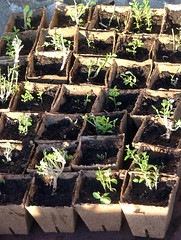
Above is a photo of about 1 inch tall nasturtium seedling I planted 10 days ago in an outdoor planter

Today my suggestion is to try to plant nasturtium for several reasons:


  • it's really easy to grow
  • its seeds are approximately the size of a dry pea - which makes them a lot easier to plant precisely where you want the plant to be
  • it sprouts in only seven to ten days
  • grows really fast afterwords
  • the whole plant is edible
  • can be grown in the flower bed or in medium-sized pot indoors
  • has beautiful flowers which are also edible and starts blooming as fast as in about 5 to 6 weeks
  • has beautifully shaped leaves, grows in a bushy manner and looks good even without blooms
  • in a flower bed nasturtium will reseed itself and keep coming back every year
  • planted indoors this plant will provide almost instant greenery and thus improve your living space


You might be wondering about a lot of "HOW TOs", you might have loads of questions and - let me assure you - in gardening (like in most other things) - simple is the best.


There's no need to get all stressed out about the seeds and planting and soil and planters. Simply start where you are, with what you have.


How to plant seeds indoors


These are simplified instructions on how to plant one nasturtium seed - in other words - that's how I do it and it's working for me.


There are many conditions that affect every growth and we can't always control them all. Be creative and if one method doesn't work for you, try something a little bit different. Change one factor and observe the results.


  1. any container in the size of at least 4 inches (10 cm) across will do - as long as you poke some drainage holes on the bottom
  2. cover the bottom of the planter with paper coffee filter - it prevents washing the soil out of your pot
  3. fill the pot with store-bought potting mix (garden soil in planters is usually a ticket to failure)
  4. use mister or spray bottle to water - until the water shows up in the saucer underneath the planter
  5. lay a single nasturtium seed on top of the soil in the middle of your chosen planter
  6. cover the seed with 1/2 inch (1 cm) of soil
  7. place to a sunny spot and check on this about-to-happen tiny miracle every day
  8. keep the soil moist - but not soggy


How to plant seeds outdoors

Planting seeds outdoors is pretty much the same. Prepare the soil and then follow instructions from the seed packet regarding spacing, depth and sun requirements. For seedlings hand-watering with watering can is the best because those small plants are quite fragile.


***

Monday, November 3, 2008

Thursday, October 9, 2008

October in Florida gardens


Unique


While most of the country gardeners are getting ready for winter break from their gardening, the Floridians are given another opportunity to spice-up their yards and gardens, to add new colors (or more color) and implement new landscaping ideas by planting some perennials.

We can plant annuals that can only be used in spring time in colder climates. Some best flowers can easily be started from seeds, others can be purchased at the local nursery and some new bulbs will add spring and summer unseen before.

An excellent page on everything that can be planted in October garden in Florida can be found here: Garden ideas: October flowers

Friday, September 19, 2008

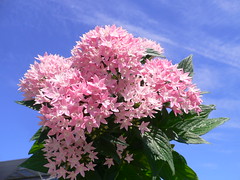
Easy to propagate annuals: Star cluster or "Pentas Lanceolata"


Pink "Pentas Lanceolata"
Originally uploaded by Luigi FDV
These beauties come in pink, lavender pink or red. They vigorously bloom all summer and the butterflies are crazy about them!

They grow 12 to 18 inches tall and can spread 2 to 3 feet wide (given enough space). Pentas perfom equally well in baskets, planters and borders and don't mind Florida's hot sun one bit...

Thursday, September 18, 2008

Old and young - like fall and spring


Two days ago, this was the most stunning sight I caught in my backyard that morning. It was one of those moments when you exclaim out loud "OMG" - even though there's noone around to explain the reaction. It was also one of those moments when you simply have to take a picture...


***

Wednesday, September 17, 2008

Colors of fall

Puffy clouds and the browning needles on the tall longleaf pine tree - the first sights and smells of fall... although, there are still plenty of summery pinks and reds and blues around.
 
  
***

Tuesday, September 16, 2008

Easy to propagate annuals: Angels' Trumpets


Trumpets
Originally uploaded by flower_bee (away)
I remember as it was yesterday when and where I first saw these beauties - although I was still a child.

It was a beautiful summer and my family was taking summer vacations on the beach. Angels' Trumpets were growing on the trellis, all over the place where we had lunch every day. Even back then I thought that these were the most amazing blossoms since I've never before seen anything quite like that .

Those blooms I'll never forget were brilliantly bright orange and fit perfectly on every kid's fingers.

A funny thought just crossed my mind - maybe this sight was an inspiration for Grinch's fingers... :)

Anyway, soon after that my aunt that not only has a green thumb but a magical one (since she successfully grows just about anything she can lay her hands on - or anything with roots) planted one. This tropical plant didn't like colder climate quite as much so the blooms weren't nearly as bountiful as on the beach but it faithfully bloomed every summer and we all enjoyed the unusual flowers and their scent, especially my grandfather.

Now, back to the present.

Angel's trumpet (Brugmansia spp.) grows 4 to 8 feet tall and 3 to 6 feet wide. It likes full sun or at least afternoon sun. Its blooms are sweetly scented and come in shades from white to salmon, soft yellow, peachy pink to orange.

Now is the right time to make cuttings of Angel's trumpet and enjoy even more angelic trumpets and their sweet scent next season.


***

Monday, September 15, 2008

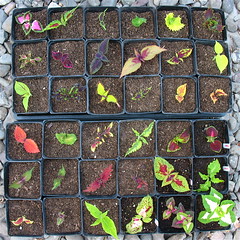
Easy to propagate annuals: Coleus

My earliest memory of propagating with cuttings is all about coleus. My dad always had at least two thriving Coleus plants on our living room window and jars and glass vases all around our home were filled with brightly colored Coleus' cuttings, some rooted and ready to be planted at all times.

It's probably that memory of my childhood that makes me feel that Coleus is an all time easiest plant to root - by simply sticking its cutting in water.

Although, I have to warn you that rooting in water produces quite brittle roots and careful planting is recommended.

But if you propagate as described in this post, Coleus is your almost guaranteed success.

With plenty of moisture, every plant will add a big splash of color to any proper space.

Coleus can grow 2 to 3 feet in height and width. not that different cultivars have different sun requirements.


***

Sunday, September 14, 2008

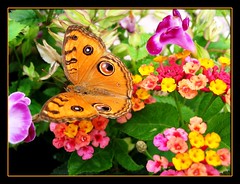
Easy to propagate annuals: Lantana

Some annuals are easy to propagate. So, instead of tossing them in fall, make cuttings and have plenty of continuously blooming beauties for next year's flower beds and containers.

Lantana spp. is one of those beautiful, hardy plants and butterfly magnets that we never want to be without again after we've experienced their vigor and brightly-colored blooms.

They come in gold, yellow, pink, peach, orange and red color and grow 2 to 3 feet tall and 2 to 4 feet wide.


***

Saturday, September 13, 2008

How to propagate annuals in fall

About two months before the projected first frost day for your area it's time to start collecting cuttings to propagate some annuals for next year's garden and planters.

Plugs or cell trays are your best choice for large quantity of cuttings, otherwise any small, clean container with drainage holes will do.

Soilless seed-starting mix drains well, is disease free and works really well with rooting hormone. In my experience, this is by far the most full-proof combo for successful start of any kind of cuttings.

Cut the top 4 to 6 inches from the healthiest branches of chosen plant. Place cuttings in water and plant as soon as possible.

Poke a hole into well watered soil, strip the cutting off the first two to four sets of leaves (these wounds will form new roots).

To promote branching, pinch off the top set of leaves.

Cuttings with large leaves require an extra step. Cut their leaves in half to make sure their stem can take up enough water for the new plant to root and grow.

Dip the bare stem of the cutting in water first and then in rooting hormone, tamp gently to remove excess hormone and finally insert cutting in the soil.

Keep cuttings away from direct sun.

To add extra boost, some sources recommend misting newly planted cuttings with water, mixed with a splash of seaweed solution - twice a day for two to four weeks.

A piece of plastic or burlap over cuttings will reduce evaporation.

Water your cuttings when the soil becomes dry and transplant them into 3-inch pots before they become rootbound.


***

Monday, July 14, 2008

New kid on the block

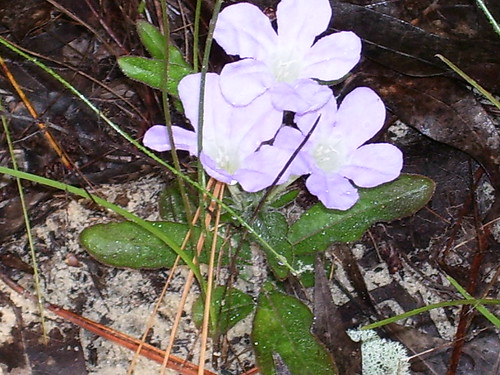
The first thing I've seen this morning when opening my bedroom window - such a pretty blooms, another Florida native plant I don't know the name of.


***

Thursday, July 10, 2008

More Hibiscus Magic

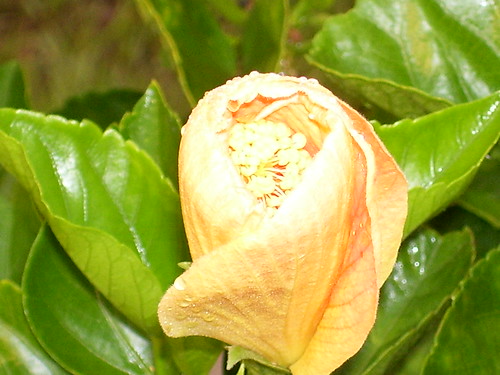
Yellow and red hibiscus in front of my house with all of their numerous, beautiful blooms never cease to fascinate me (it's pretty obvious from all of the photos I've been taking, isn't it?).


***

Daria's World - blog about people and things that matter the most

Daria's World - blog about people and things that matter the most
Google