Recently I came across an article Seven Herbs to See You Through Winter.
Most everyone heard about benefits of herbs but this article suggests seven of them that are supposed to be especially beneficial for winter time.
I gathered for you some beautiful images and short descriptions for these seven natural herbal winter helpers.
1. Chamomile (Matricaria recutita) - INSOMNIA
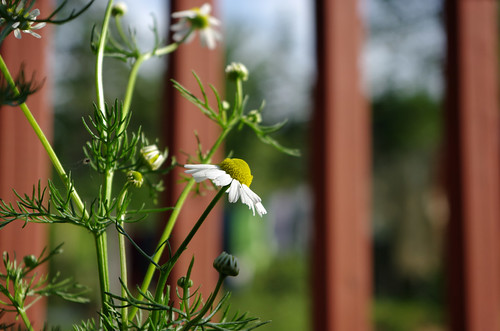
Photo Chamomile - HBW! - courtesy of Flidais
For centuries chamomile has been used as a mild sleep aid. Scientific studies attribute chamomile's gentle sedative activity to alpha-bisabolol, an active ingredient that can be found in its oil.
Some people who are allergic to the plants from aster family (including ragweed) may also be allergic to chamomile.
Ways to take chamomile:
- capsules (300 to 400 mg) - up to six/day
- tincture - 10 to 40 drops - three times/day
- tea - 1/2 to 1 teaspoon of dried flowers (or one tea bag) in a hot cup of water - three times/day or at least once - before bed time
2. Asian ginseng (Panax ginseng) - ENERGY

Shen Nong wrote in 2,000 years old herbal that ginseng is good for quieting the spirit, curbing the emotions, brightening the eyes, enlightening the mind, increasing wisdom, and, with continuous use, “longevity with light weight.”
Scientific studies more or less confirmed these observations and in Germany, Asian ginseng products are even allowed to be 'labeled as tonics to treat fatigue, reduced work capacity, and lack of concentration.'
Ways to take Asian ginseng:
- capsules of dried or steamed root (500 to 600 mg) - up to four/day
- tea - 3 teaspoons of dried or sliced root per cup of water. Simmer the herb and water in a saucepan for 45 minutes, keep it covered. Strain and let cool down. Drink one cup - two to three times/day.
3. Bilberry (Vaccinium myrtillus) - EYE STRAIN
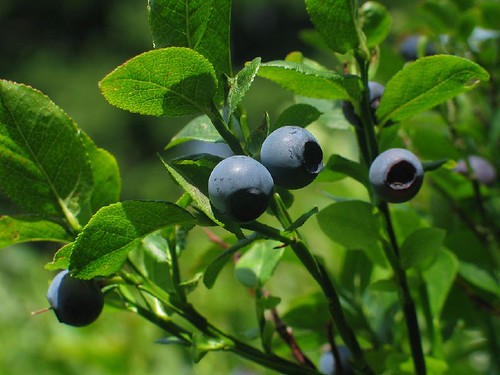
Photo _Bilberry 1 - courtesy of potus212
In sixteenth century Europe bilberry leaves were popular to fight inflammation, infection, to treat diarrhea, prevent scurvy (vitamin C deficiency), and disinfect mouth sores.
This blueberry relative is small shrub with blue/black berries, native to northern Europe, western
"During World War II, pilots in the British Royal Air Force reported improved night vision after eating bilberry jam. During the 1960s, Italian and French scientists investigated these reports to learn whether bilberries could improve vision. As a result, preparations of bilberry fruit are used in
Ways to take bilberry:
- capsules - two to three/day (standardized capsules that contain 25 % anthocyanosides)
4. Ginkgo (Ginkgo biloba) - CIRCULATION
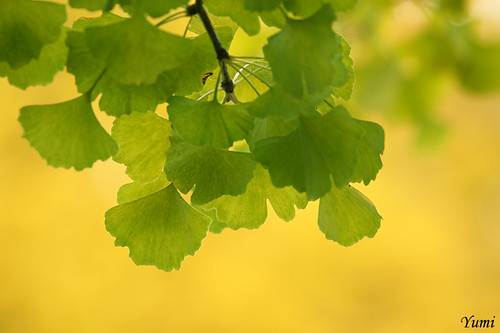
Photo green and yellow - courtesy of * Yumi *
Ginkgo tree has been around for more than 200 million years. In China it has been cultivated since the fifteenth century and its leaves used to “benefit the brain", treat lung disorders, cough and asthma symptoms, and diarrhea.
In Europe, Ginkgo belongs to the top list of best selling herbal medicines.
Scientific studies show that Ginkgo improves circulation to extremities and brain due to to 'unique compounds called flavone glycosides and ginkgolides, which inhibit development of cardiovascular, inflammatory, and respiratory disorders. Ginkgo is a strong antioxidant — it directs its free-radical scavenging activity to the brain, central nervous system, and cardiovascular system. This is what makes it promising in the treatment of age-related declines of brain function.'
Ways to take Ginkgo:
- capsules - three/day (containing at least 40 mg of standardized extract)
5. St. John ’s wort (Hypericum perforatum) - DEPRESSION
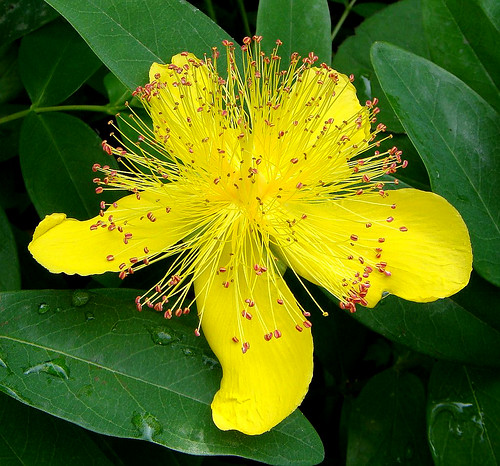
Photo "St. John's Wort: "... The Sword of Michael smote, and fell'd / Squadrons at once". Jochum Hof, Steijl, Limburg, The Netherlands" - courtesy of Rana Pipiens
St. John's Wort is native to Europe and grows as a weed in certain parts of U.S. You probably heard it on the news several times that this herb can offer the benefits of prescription antidepressants - without the side effects.
While in the Middle Ages several remarkable, mystical properties were attributed to this plant, recent scientific studies reported participating outpatients (taking St. John's Wort) - feeling less sad, hopeless, helpless, useless, and fearful.
Note that it takes six weeks of continuous use of this herb to see the results.
Ways to take St. John's Wort:
- capsules - three times/day (300 mg, standardized to 0.3 percent hypericin)
- tea - 1/2 to 1 teaspoon of dried herb - steep in a cup of hot water for 10 minutes
- tincture - 3 to 4 droppers-ful twice daily
6. Echinacea (Echinacea angustifolia, E. pallida, E. purpurea) - COLDS
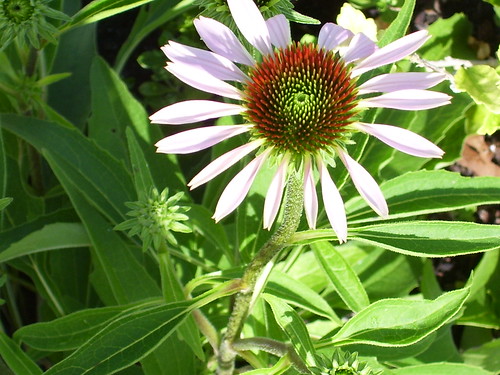
Photo "Purple Echinacea" courtesy of sunflower19020
One of the most common herbal cold medicines on the market, Echinacea is also a favorite of gardeners - with its attractive appearance and hardiness.
Native Americans used it to cure disorders, ranging from colds to cancer.
Scientific studies found that Echinacea enhances the activity of white blood cells and other specialized immune system cells - although no single chemical constituent has been recognized as causing this herb's medicinal proposition.
Ways to take Echinacea:
- capsules - up to nine 300 to 400 mg capsules/day
- tincture - 60 drops three times/day, start taking at the first sign of cold or flu and take continuously for two weeks
- tea
According to German government, people who suffer from diseases of the immune system, including multiple sclerosis and HIV infection - should not take Echinacea.
7. Elderberry (Sambucus canadensis, S. nigra) - FLU
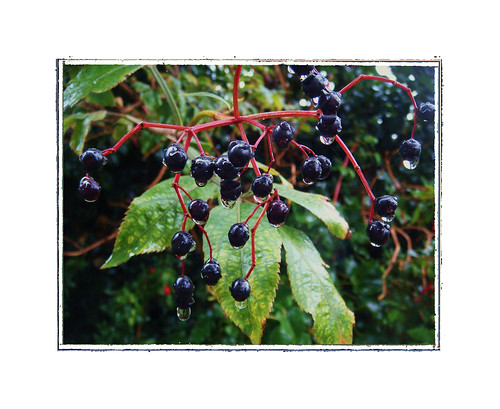
Photo "Elderberry Wine" courtesy of Liamfm .
This plant has more uses than I can squeeze into this one post. Throughout the centuries flowers, leaves, berries, bark and roots have all been used in traditional folk medicine. Elderberry bushes and trees have also been assigned several mythical and mysterious powers and properties - all around the world.
German physicians prescribe elderberry flower to activate sweating for treating fevers and to increase bronchial secretions related to full-blown colds.
Israeli scientist Dr. Madeleine Mumcuoglu, along with her colleagues at
Ways to take Elderberry:
- capsules - up to six 500 to 600 mg capsules/day
- tincture - 40 drops every four hours
- tea - simmer 2 to 3 teaspoons of dried flowers in one cup of hot water for 10 to 15 minutes - drink up to three times/day
And, by the way, did you know that elderberries contain more vitamin C than any other herb - except rosehips and black currant?
***


