This last video from the series does not require any explanations. Enjoy it and use Dr. Hyman's advice to your best advantage.
***
Wednesday, January 28, 2009

Tuesday, January 27, 2009
Energy metabolism boosts
I'm again including a definition to make information from the video even easier to understand.
Food energy - definition from Wikipedia
***
Food energy - definition from Wikipedia
Food energy is the amount of energy in food that is available through digestion. The values for food energy are expressed in kilojoules (kJ) or food Calories (kcal).
***
Monday, January 26, 2009
The detoxification
I find it really interesting that there are so many different definitions of detoxification available out there, some even claiming how there's no scientific proof that detox diets work. I chose three to include into this post with today's video:
The first one comes from Elson M. Haas M.D.
This second one I found on Wikipedia:
This last one I found at The Light Party:
***
The first one comes from Elson M. Haas M.D.
Now that I have devoted so many pages to nutrients, foods, diets, and special eating plans to support health and to treat a variety of disease states, it is important to emphasize a number of programs in the category of elimination--both the basic process of detoxification and programs that will help us cleanse specific common toxins and habits from our lives.
It is somewhat difficult to separate the concepts and practices of detoxification from those of fasting. Fasting, or the avoidance of solid food, as I use the term here, is one method of detoxification, probably the most effective, yet extreme, form. There are many other ways to detoxify.
Toxicity is of much greater concern in the twentieth century than ever before. There are many new and stronger chemicals, air and water pollution, radiation and nuclear power. We ingest new chemicals, use more drugs of all kinds, eat more sugar and refined foods, and daily abuse ourselves with various stimulants and sedatives. The incidence of many toxicity diseases has increased as well. Cancer and cardiovascular disease are two of the main ones. Arthritis, allergies, obesity, and many skin problems are others. In addition, a wide range of symptoms, such as headaches, fatigue, pains, coughs, gastrointestinal problems, and problems from immune weakness, can all be related to toxicity.
This second one I found on Wikipedia:
Detoxification, or detox for short is the removal of toxic substances from the body. In conventional medicine, detoxification can also be achieved artificially by techniques such as dialysis and (in a very limited number of cases) chelation therapy.
This last one I found at The Light Party:
Detoxification is the process of clearing toxins from the body or neutralizing or transforming them, and clearing excess mucus and congestion. Many of these toxins come from our diet, drug use, and environmental exposure, both acute and chronic. Internally, fats, especially oxidized fats and cholesterol, free radicals, and other irritating molecules act as toxins. Poor digestion, colon sluggishness and dysfunction, reduced liver function, and poor elimination through the kidneys, respiratory tract, and skin all add to increased toxicity.
Detoxification involves dietary and lifestyle changes which reduce intake of toxins and improve elimination. Avoidance of chemicals, from food or other sources, refined food, sugar, caffeine, alcohol, tobacco, and many drugs helps minimize the toxin load. Those lifestyle changes are a direct result of choices you make in your life.
***
Sunday, January 25, 2009
How digestion affects everything else
Digestion means a process of turning the foods we eat into the energy, necessary to live. This process of turning food into energy also creates some waste that needs to be eliminated.
In the video below learn about the importance of healthy gut.
***
Why is digestion important?
When you eat foods—such as bread, meat, and vegetables—they are not in a form that the body can use as nourishment. Food and drink must be changed into smaller molecules of nutrients before they can be absorbed into the blood and carried to cells throughout the body. Digestion is the process by which food and drink are broken down into their smallest parts so the body can use them to build and nourish cells and to provide energy. (from http://digestive.niddk.nih.gov/ddiseases/pubs/yrdd)
In the video below learn about the importance of healthy gut.
***
Saturday, January 24, 2009
Inflammation causes
Inflammation: A basic way in which the body reacts to infection, irritation or other injury, the key feature being redness, warmth, swelling and pain. Inflammation is now recognized as a type of nonspecific immune response. (from medicinenet.com)
Find out how to address underlying causes of many issues we deal with far too often - in today's video.
***
Friday, January 23, 2009
The hormones
Hormones (from Greek ὁρμή - "impetus") are chemicals released by cells that affect cells in other parts of the body. Only a small amount of hormone is required to alter cell metabolism. It is essentially a chemical messenger that transports a signal from one cell to another. (from Wikipedia)
This second video Dr. Mark Hyman explains in a simple way - why we so often experience ups and downs - physically and emotionally - and how to achieve more balance by simply eliminating things like corn syrup from our diets.
***
Thursday, January 22, 2009
Why is nutrition important?
For the next seven consecutive days at midnight EST (-5 GMT) I'll be publishing videos by Dr. Mark Hyman, three-time New York Times bestselling author, sought-after medical consultant, educator, and a leader in the emerging field of functional medicine.
What is functional medicine?
Do you know what's the most powerful tool to fix your broken brain?
Do you know what is the most powerful medicine?
Find answers to the two questions above and many more in this first video.
***
What is functional medicine?
'Functional medicine treats the underlying biological cause of disease instead of managing or masking symptoms.
Functional medicine is more successful in treating illness and disease, and the solution to the epidemic of chronic disease.
In his work, Dr. Hyman applies over 20 years of experience treating patients with the cutting-edge science of functional medicine, placing him at the forefront of progressive medical care and education in the United States. A pioneering voice for change in the way health care is perceived and provided, Dr. Hyman champions an innovative process that applies years of medical research that has not, until now, been translated into use in hospitals, homes, and the community.'
Do you know what's the most powerful tool to fix your broken brain?
Do you know what is the most powerful medicine?
Find answers to the two questions above and many more in this first video.
***
Wednesday, January 21, 2009
How many people have cancer?
Cancer Cure - The Video the Pharmaceutical Industry Doesn't Want You to See
Today's Featured Video
Have you ever asked yourself a question: how many people die from cancer each year?
Here comes the answer:
Every 60 seconds someone dies from cancer — and every 3 minutes, someone new is diagnosed with cancer. That someone could even be you. If you know anyone who's suffering from cancer (and who doesn't?), we urge you to watch this 5-minute video titled "Is This the Cure for Cancer That Really Works?" This is the video that the pharmaceutical industry does NOT want you to see!
When this video was first put online, it circled the globe and was viewed by people in all continents within a matter of 31 minutes. It has gotten over 189,000 views in the last couple of weeks alone. Don't forget to send the link to everyone you know who has cancer (even those who are in remission). You might even end up saving someone's life. Watch the video now: ↓↓↓
A Comment from the Editor
I've reviewed the one-minute cure website thoroughly, asked all my questions (which were answered promptly and courteously by the company's
Customer Support staff), and finally bought the eBook. I'm thoroughly impressed by the eye-opening information provided, backed by
solid research findings. I can't recommend it highly enough. Whether you or a loved one are suffering from cancer (or any
other disease, for that matter), I urge you to check it out! After you watch the video, click here to send for the full story about the one-minute cure.
***
Today's Featured Video
Have you ever asked yourself a question: how many people die from cancer each year?
Here comes the answer:
Every 60 seconds someone dies from cancer — and every 3 minutes, someone new is diagnosed with cancer. That someone could even be you. If you know anyone who's suffering from cancer (and who doesn't?), we urge you to watch this 5-minute video titled "Is This the Cure for Cancer That Really Works?" This is the video that the pharmaceutical industry does NOT want you to see!
When this video was first put online, it circled the globe and was viewed by people in all continents within a matter of 31 minutes. It has gotten over 189,000 views in the last couple of weeks alone. Don't forget to send the link to everyone you know who has cancer (even those who are in remission). You might even end up saving someone's life. Watch the video now: ↓↓↓
A Comment from the Editor
I've reviewed the one-minute cure website thoroughly, asked all my questions (which were answered promptly and courteously by the company's
Customer Support staff), and finally bought the eBook. I'm thoroughly impressed by the eye-opening information provided, backed by
solid research findings. I can't recommend it highly enough. Whether you or a loved one are suffering from cancer (or any
other disease, for that matter), I urge you to check it out! After you watch the video, click here to send for the full story about the one-minute cure.
***
Sunday, January 18, 2009
Seven herbs
Recently I came across an article Seven Herbs to See You Through Winter.
Most everyone heard about benefits of herbs but this article suggests seven of them that are supposed to be especially beneficial for winter time.
I gathered for you some beautiful images and short descriptions for these seven natural herbal winter helpers.
1. Chamomile (Matricaria recutita) - INSOMNIA
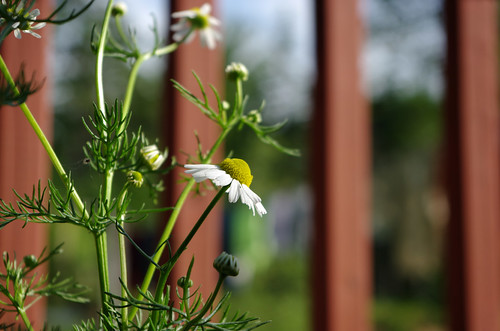
Photo Chamomile - HBW! - courtesy of Flidais
For centuries chamomile has been used as a mild sleep aid. Scientific studies attribute chamomile's gentle sedative activity to alpha-bisabolol, an active ingredient that can be found in its oil.
Some people who are allergic to the plants from aster family (including ragweed) may also be allergic to chamomile.
Ways to take chamomile:
- capsules (300 to 400 mg) - up to six/day
- tincture - 10 to 40 drops - three times/day
- tea - 1/2 to 1 teaspoon of dried flowers (or one tea bag) in a hot cup of water - three times/day or at least once - before bed time
2. Asian ginseng (Panax ginseng) - ENERGY

Shen Nong wrote in 2,000 years old herbal that ginseng is good for quieting the spirit, curbing the emotions, brightening the eyes, enlightening the mind, increasing wisdom, and, with continuous use, “longevity with light weight.”
Scientific studies more or less confirmed these observations and in Germany, Asian ginseng products are even allowed to be 'labeled as tonics to treat fatigue, reduced work capacity, and lack of concentration.'
Ways to take Asian ginseng:
- capsules of dried or steamed root (500 to 600 mg) - up to four/day
- tea - 3 teaspoons of dried or sliced root per cup of water. Simmer the herb and water in a saucepan for 45 minutes, keep it covered. Strain and let cool down. Drink one cup - two to three times/day.
3. Bilberry (Vaccinium myrtillus) - EYE STRAIN
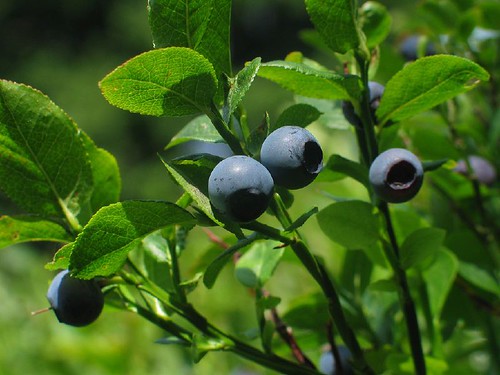
Photo _Bilberry 1 - courtesy of potus212
In sixteenth century Europe bilberry leaves were popular to fight inflammation, infection, to treat diarrhea, prevent scurvy (vitamin C deficiency), and disinfect mouth sores.
This blueberry relative is small shrub with blue/black berries, native to northern Europe, western
"During World War II, pilots in the British Royal Air Force reported improved night vision after eating bilberry jam. During the 1960s, Italian and French scientists investigated these reports to learn whether bilberries could improve vision. As a result, preparations of bilberry fruit are used in
Ways to take bilberry:
- capsules - two to three/day (standardized capsules that contain 25 % anthocyanosides)
4. Ginkgo (Ginkgo biloba) - CIRCULATION
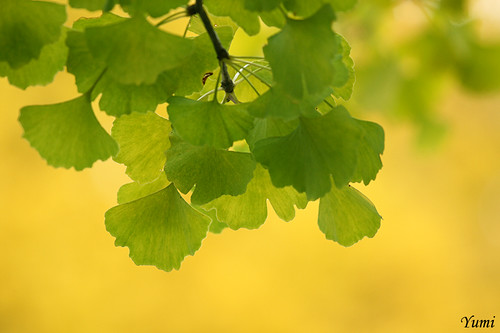
Photo green and yellow - courtesy of * Yumi *
Ginkgo tree has been around for more than 200 million years. In China it has been cultivated since the fifteenth century and its leaves used to “benefit the brain", treat lung disorders, cough and asthma symptoms, and diarrhea.
In Europe, Ginkgo belongs to the top list of best selling herbal medicines.
Scientific studies show that Ginkgo improves circulation to extremities and brain due to to 'unique compounds called flavone glycosides and ginkgolides, which inhibit development of cardiovascular, inflammatory, and respiratory disorders. Ginkgo is a strong antioxidant — it directs its free-radical scavenging activity to the brain, central nervous system, and cardiovascular system. This is what makes it promising in the treatment of age-related declines of brain function.'
Ways to take Ginkgo:
- capsules - three/day (containing at least 40 mg of standardized extract)
5. St. John ’s wort (Hypericum perforatum) - DEPRESSION
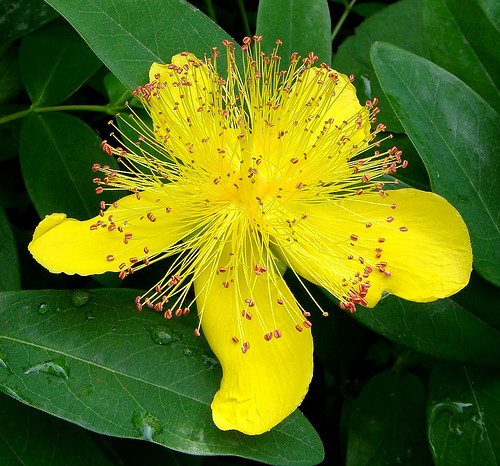
Photo "St. John's Wort: "... The Sword of Michael smote, and fell'd / Squadrons at once". Jochum Hof, Steijl, Limburg, The Netherlands" - courtesy of Rana Pipiens
St. John's Wort is native to Europe and grows as a weed in certain parts of U.S. You probably heard it on the news several times that this herb can offer the benefits of prescription antidepressants - without the side effects.
While in the Middle Ages several remarkable, mystical properties were attributed to this plant, recent scientific studies reported participating outpatients (taking St. John's Wort) - feeling less sad, hopeless, helpless, useless, and fearful.
Note that it takes six weeks of continuous use of this herb to see the results.
Ways to take St. John's Wort:
- capsules - three times/day (300 mg, standardized to 0.3 percent hypericin)
- tea - 1/2 to 1 teaspoon of dried herb - steep in a cup of hot water for 10 minutes
- tincture - 3 to 4 droppers-ful twice daily
6. Echinacea (Echinacea angustifolia, E. pallida, E. purpurea) - COLDS
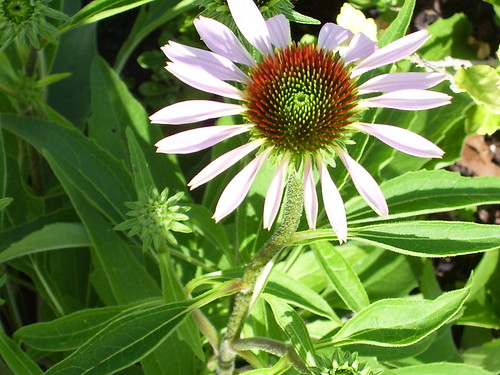
Photo "Purple Echinacea" courtesy of sunflower19020
One of the most common herbal cold medicines on the market, Echinacea is also a favorite of gardeners - with its attractive appearance and hardiness.
Native Americans used it to cure disorders, ranging from colds to cancer.
Scientific studies found that Echinacea enhances the activity of white blood cells and other specialized immune system cells - although no single chemical constituent has been recognized as causing this herb's medicinal proposition.
Ways to take Echinacea:
- capsules - up to nine 300 to 400 mg capsules/day
- tincture - 60 drops three times/day, start taking at the first sign of cold or flu and take continuously for two weeks
- tea
According to German government, people who suffer from diseases of the immune system, including multiple sclerosis and HIV infection - should not take Echinacea.
7. Elderberry (Sambucus canadensis, S. nigra) - FLU
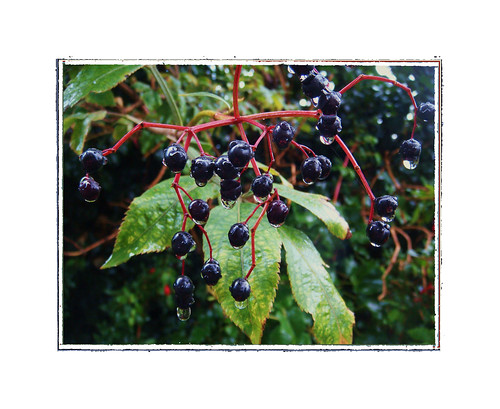
Photo "Elderberry Wine" courtesy of Liamfm .
This plant has more uses than I can squeeze into this one post. Throughout the centuries flowers, leaves, berries, bark and roots have all been used in traditional folk medicine. Elderberry bushes and trees have also been assigned several mythical and mysterious powers and properties - all around the world.
German physicians prescribe elderberry flower to activate sweating for treating fevers and to increase bronchial secretions related to full-blown colds.
Israeli scientist Dr. Madeleine Mumcuoglu, along with her colleagues at
Ways to take Elderberry:
- capsules - up to six 500 to 600 mg capsules/day
- tincture - 40 drops every four hours
- tea - simmer 2 to 3 teaspoons of dried flowers in one cup of hot water for 10 to 15 minutes - drink up to three times/day
And, by the way, did you know that elderberries contain more vitamin C than any other herb - except rosehips and black currant?
***
Thursday, January 15, 2009
Giveaway winner
We finally have a winner of a Glass beads and silver stretch bracelet giveaway prize drawing - MorgansMummy from Australia.

Congratulations and enjoy the pretty bracelet, Emma! :)
***

GIF image courtesy of Bestgraph
Congratulations and enjoy the pretty bracelet, Emma! :)
***
Friday, January 9, 2009
How natural...
Consuming a whole plant provides synergy which is lost when a single compound (active ingredient) is isolated, extracted and processed into some kind of a processed - fortified nutritional form (tablet, bar, chewable, beverage, cereal etc.).
Despite the heavily advertised benefits of specific nutrients that were recognized as healthful in clinical studies and isolated for mass production, noone ever tells us that these fancy products (bursting with ingredients that supposedly fight cancer, heart disease, aging process and more) - are still dead, processed foods, fortified with (most likely) synthetic vitamins and minerals and other artificial additives and preservatives - some of them harmful: hydrogenated oils, preservatives, neurotoxins.
The most natural way of dieting would be consuming plants and foods in their whole form - for bodies well-nourished, minds balanced and immune systems hearty.
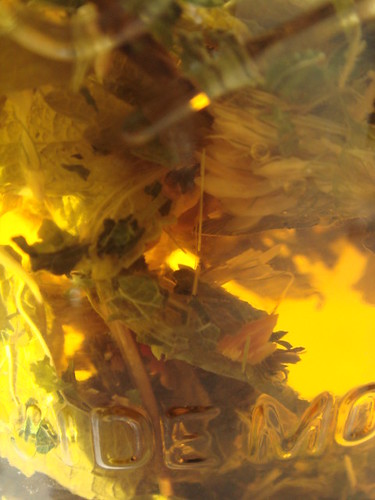
Infusions made of nourishing herbs (lemon balm, nettles, oat straw, raspberry leaf) are an easy way to add extra nutrients to your diet - and preventive.
The following is an article about herbal infusions that I really like and a summary of quantities used for infusions made of different parts of plants - both by the same herbalist author:
An infusion is a large amount of herb brewed for a long time. Typically, one ounce by weight (about a cup by volume) of dried herb is placed in a quart jar which is then filled to the top with boiling water, tightly lidded and allowed to steep for 4-10 hours. After straining, a cup or more is consumed, and the remainder chilled to slow spoilage. Drinking 2-4 cups a day is usual. Since the minerals and other phytochemicals in nourishing herbs are made more accessible by drying, dried herbs are considered best for infusions.
I make my infusions at night before I go to bed and they are ready in the morning. I put my herb in my jar and my water in the pot, and the pot on the fire, then brush my teeth (or sweep the floor) until the kettle whistles. I pour the boiling water up to the rim of the jar, screw on a tight lid, turn off the stove and the light, and go to bed. In the morning, I strain the plant material out, squeezing it well, and drink the liquid. I prefer it iced, unless the morning is frosty. I drink the quart of infusion within 36 hours or until it spoils. Then I use it to water my house plants, or pour it over my hair after washing as a final rinse which can be left on.
My favorite herbs for infusion are nettle, oatstraw, red clover, and comfrey leaf, but only one at a time. The tannins in red clover and comfrey make me pucker my lips, so I add a little mint, or bergamot, when I infuse them, just enough to flavor the brew slightly. A little salt in your infusion may make it taste better than honey will.
Despite the heavily advertised benefits of specific nutrients that were recognized as healthful in clinical studies and isolated for mass production, noone ever tells us that these fancy products (bursting with ingredients that supposedly fight cancer, heart disease, aging process and more) - are still dead, processed foods, fortified with (most likely) synthetic vitamins and minerals and other artificial additives and preservatives - some of them harmful: hydrogenated oils, preservatives, neurotoxins.
The most natural way of dieting would be consuming plants and foods in their whole form - for bodies well-nourished, minds balanced and immune systems hearty.
Infusions made of nourishing herbs (lemon balm, nettles, oat straw, raspberry leaf) are an easy way to add extra nutrients to your diet - and preventive.
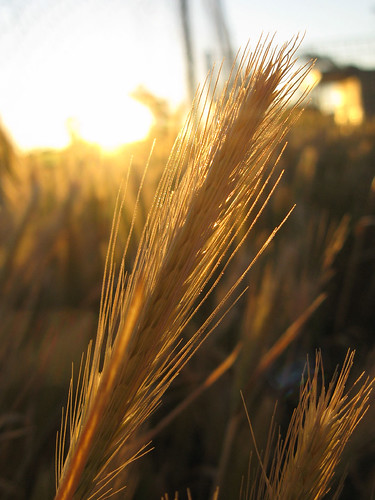
The following is an article about herbal infusions that I really like and a summary of quantities used for infusions made of different parts of plants - both by the same herbalist author:
Nourishing Herbal Infusions
An infusion is a large amount of herb brewed for a long time. Typically, one ounce by weight (about a cup by volume) of dried herb is placed in a quart jar which is then filled to the top with boiling water, tightly lidded and allowed to steep for 4-10 hours. After straining, a cup or more is consumed, and the remainder chilled to slow spoilage. Drinking 2-4 cups a day is usual. Since the minerals and other phytochemicals in nourishing herbs are made more accessible by drying, dried herbs are considered best for infusions.
I make my infusions at night before I go to bed and they are ready in the morning. I put my herb in my jar and my water in the pot, and the pot on the fire, then brush my teeth (or sweep the floor) until the kettle whistles. I pour the boiling water up to the rim of the jar, screw on a tight lid, turn off the stove and the light, and go to bed. In the morning, I strain the plant material out, squeezing it well, and drink the liquid. I prefer it iced, unless the morning is frosty. I drink the quart of infusion within 36 hours or until it spoils. Then I use it to water my house plants, or pour it over my hair after washing as a final rinse which can be left on.
My favorite herbs for infusion are nettle, oatstraw, red clover, and comfrey leaf, but only one at a time. The tannins in red clover and comfrey make me pucker my lips, so I add a little mint, or bergamot, when I infuse them, just enough to flavor the brew slightly. A little salt in your infusion may make it taste better than honey will.
Photo herbs steeping - courtesy of hit_the_snow
***
| |||||||
| Plant Part --------------- Roots/barks Leaves Flowers Seeds/berries | Amount ----------- 1 oz/30 g. 1 oz/30 g. 1 oz/30 g. 1 oz/30 g. | Jar/Water ------------ pint/500 ml quart/liter quart/liter pint/500 ml | Length of Infusion ------------------ 8 hours minimum 4 hours minimum 2 hours minimum 30 min. minimum | ||||
***
Thursday, January 8, 2009
Herb definition
I wish there would be an easy answer to your question, Patricia NZ:
"I thought that all herbs were medicinal, but if some are poisonous how do you define what a herb is? Have you a good definition please?"

You are right, Patricia. Plants as well as spices, seeds, bark, roots, bulbs,fungi, sea weeds etc. - are called herbs because at one time or another in the history of humankind they were used for healing/medicinal purposes.
This morning, while I was thinking about an answer to your question, I came across an article written by Cori Young and her statement should partially answer your question:
"We've all heard the alarming research showing that a specific herb has been found to be toxic - comfrey, ephedra, kava, etc. Yet somehow Native peoples managed to use these herbs very successfully for many generations."
Plants haven't become something else from what they used to be in ancient history. But big corporations that are selling us synthetic nutrients and vitamins for big profits - they emerged more recently.
Everything in nature is there for a purpose, including the so-called poisonous or toxic plants which require caution and expertise when used.
Indigenous people from around the world were much more connected to the nature than we are today. Plants "talked to them". They learned when was the best time to harvest, what was the proper way to gather certain part of an herb, they only picked as much as they needed - not everything they could get their hands on, they knew what time of the day and year certain herb was at the peak of its healing strength - and so much more.

Western civilization managed to destroy that connection and replace it with profit-oriented mind-set. A large portion of that invaluable native knowledge got lost and forgotten and we became dependent on laws and rules, regulations and prescriptions.
***
"I thought that all herbs were medicinal, but if some are poisonous how do you define what a herb is? Have you a good definition please?"
Photo Asian Medicinal Herbs - Text courtesy of atlantic-acupunctu re
You are right, Patricia. Plants as well as spices, seeds, bark, roots, bulbs,fungi, sea weeds etc. - are called herbs because at one time or another in the history of humankind they were used for healing/medicinal purposes.
This morning, while I was thinking about an answer to your question, I came across an article written by Cori Young and her statement should partially answer your question:
"We've all heard the alarming research showing that a specific herb has been found to be toxic - comfrey, ephedra, kava, etc. Yet somehow Native peoples managed to use these herbs very successfully for many generations."
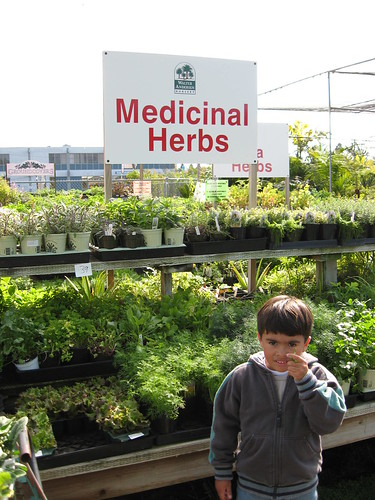
Photo courtesy of asylumoffunk
Plants haven't become something else from what they used to be in ancient history. But big corporations that are selling us synthetic nutrients and vitamins for big profits - they emerged more recently.
Everything in nature is there for a purpose, including the so-called poisonous or toxic plants which require caution and expertise when used.
Indigenous people from around the world were much more connected to the nature than we are today. Plants "talked to them". They learned when was the best time to harvest, what was the proper way to gather certain part of an herb, they only picked as much as they needed - not everything they could get their hands on, they knew what time of the day and year certain herb was at the peak of its healing strength - and so much more.
Photo courtesy of job_earth
Western civilization managed to destroy that connection and replace it with profit-oriented mind-set. A large portion of that invaluable native knowledge got lost and forgotten and we became dependent on laws and rules, regulations and prescriptions.
***
Wednesday, January 7, 2009
Pineapple Weed
Pineapple Weed (Matricaria discoidea) is a pretty plant, native to North America and NE Asia.
When crushed, its flowers give off chamomile/pineapple aroma. I assume that's where the "pineapply name" came from since the shape of the plant does not resemble pineapple in any way.
Pineapple weed is edible herb, usually used in salads or for herbal tea.
Medicinally this herb has been used for fevers, infected sores, gastrointestinal upsets and postpartum (after birth) anemia.
Tea made of Pineapple Weed has been found to cause strong allergic reactions in people with hay fewer.
***

When crushed, its flowers give off chamomile/pineapple aroma. I assume that's where the "pineapply name" came from since the shape of the plant does not resemble pineapple in any way.
Pineapple weed is edible herb, usually used in salads or for herbal tea.
Medicinally this herb has been used for fevers, infected sores, gastrointestinal upsets and postpartum (after birth) anemia.
Tea made of Pineapple Weed has been found to cause strong allergic reactions in people with hay fewer.
***
Tuesday, January 6, 2009
Safe and...
A couple of weeks ago Owen Cutajar has left me the following question in comments:
"Are there any herbs you should avoid making tea from?"
Some of those I'm describing in this post. Thank you for your question, Owen! :)
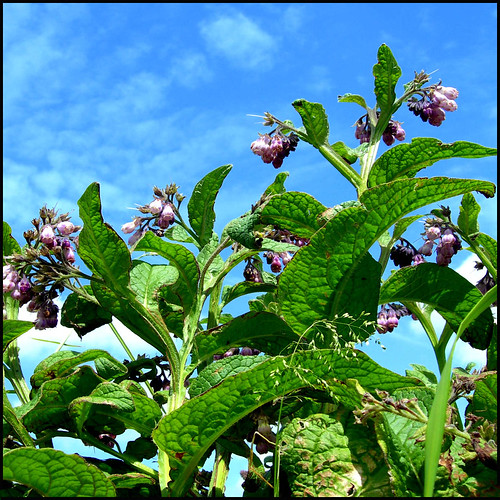
Photo of Comfrey herb - courtesy of ESOX LUCIUS
First of all a couple of general rules to follow - just to be on the safe side:
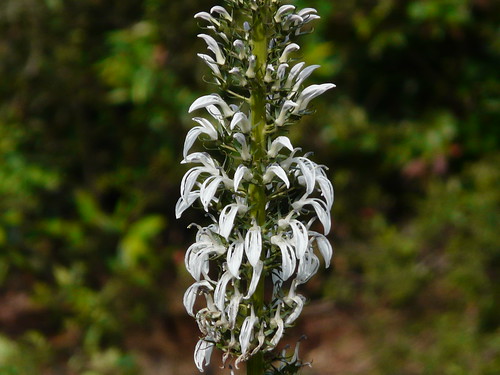
Photo of Lobelia nicotianifolia courtesy of dinesh_valke
Although Comfrey herb (top photo) historically has many uses for topical applications, it also contains certain alkaloids that could cause permanent damage to liver when used for an extended period of time/continuously.
Lobelia herb contains toxins that are similar in effect to those of niccotine.
These warnings and sometimes even the lists of prohibited plants vary from country to country. According to Wiki "The UK currently does not require natural products such as herbs to have any evidence concerning their efficacy, but does treat them technically as food stuff and require that they are safe for consumption."

Photo of Poison Ivy - courtesy of Martin LaBar (going on hiatus)
You might have heard about the Poison Ivy plant becoming more and more poisonous and causing stronger allergic reactions than ever before. Some researchers suggests that it might be thriving on polluted air. As an interesting fact, in 1900' this same plant was commonly sold as a decorative house plant for its beautiful leaves...
Similar, from reading different reports on the same herb from different parts of the world, I realized that a plant that has a pretty minor warning like "it might cause skin irritation to people with sensitive skin" sometimes has a potential to become a much stronger irritant when growing in subtropical climate conditions. An example is Rue herb (Ruta graveolens) - another beautiful plant.
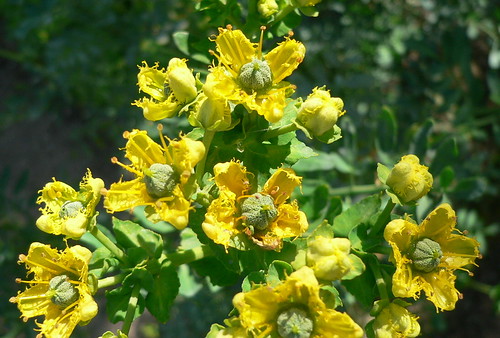
Photo of Rue herb - courtesy of Luigi FDV
Another beauty out here is Foxglove, often grown as an ornamental plant for its showy flowers. However, the entire plant is poisonous (a nibble is said to be enough to potentially cause death), including seeds and roots. At the same time, a group of active compounds are extracted from (mostly) the leaves of this herb to produce a medicine by the name of "Digitalin".

Photo of Digitalis purpurea (Common Foxglove, Purple Foxglove or Lady's Glove) - courtesy of Mclaire2
The last plant I'd like to highlight in this post is Poison Oak. Named most likely for the oak-like shape of its leaves and very unpopular in parts of northern California/west coast of U.S. - because of its toxicity that can cause a severe skin rash. It can grow as a shrub or a vine.
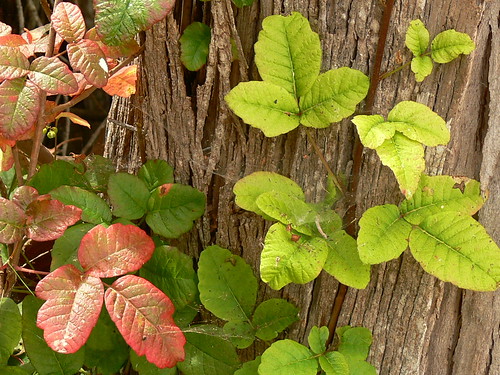
Photo of Poison Oak - courtesy of goingslo
In short, different plants have different effects on different people - therefore using herbs for medicinal purposes should be supervised by practitioner who is trained and licensed.
***
"Are there any herbs you should avoid making tea from?"
Some of those I'm describing in this post. Thank you for your question, Owen! :)
Photo of Comfrey herb - courtesy of ESOX LUCIUS
First of all a couple of general rules to follow - just to be on the safe side:
- only use an herb if you know for sure what it is - some plants are poisonous
- when buying, choose a reliable merchant that sells organic, fair-trade herbs
- avoid using tea that causes unpleasant reactions - unless you're under supervision of a licensed practitioner
- pregnant and lactating women should completely stay away from certain herbs
Photo of Lobelia nicotianifolia courtesy of dinesh_valke
Although Comfrey herb (top photo) historically has many uses for topical applications, it also contains certain alkaloids that could cause permanent damage to liver when used for an extended period of time/continuously.
Lobelia herb contains toxins that are similar in effect to those of niccotine.
These warnings and sometimes even the lists of prohibited plants vary from country to country. According to Wiki "The UK currently does not require natural products such as herbs to have any evidence concerning their efficacy, but does treat them technically as food stuff and require that they are safe for consumption."
Photo of Poison Ivy - courtesy of Martin LaBar (going on hiatus)
You might have heard about the Poison Ivy plant becoming more and more poisonous and causing stronger allergic reactions than ever before. Some researchers suggests that it might be thriving on polluted air. As an interesting fact, in 1900' this same plant was commonly sold as a decorative house plant for its beautiful leaves...
Similar, from reading different reports on the same herb from different parts of the world, I realized that a plant that has a pretty minor warning like "it might cause skin irritation to people with sensitive skin" sometimes has a potential to become a much stronger irritant when growing in subtropical climate conditions. An example is Rue herb (Ruta graveolens) - another beautiful plant.
Photo of Rue herb - courtesy of Luigi FDV
Another beauty out here is Foxglove, often grown as an ornamental plant for its showy flowers. However, the entire plant is poisonous (a nibble is said to be enough to potentially cause death), including seeds and roots. At the same time, a group of active compounds are extracted from (mostly) the leaves of this herb to produce a medicine by the name of "Digitalin".
Photo of Digitalis purpurea (Common Foxglove, Purple Foxglove or Lady's Glove) - courtesy of Mclaire2
The last plant I'd like to highlight in this post is Poison Oak. Named most likely for the oak-like shape of its leaves and very unpopular in parts of northern California/west coast of U.S. - because of its toxicity that can cause a severe skin rash. It can grow as a shrub or a vine.
Photo of Poison Oak - courtesy of goingslo
In short, different plants have different effects on different people - therefore using herbs for medicinal purposes should be supervised by practitioner who is trained and licensed.
***
Subscribe to:
Posts (Atom)
Daria's World - blog about people and things that matter the most
