Broccoli is a cool season vegetable and September through January is a good time to plant it in central and southern Florida gardens.
This good-for-all veggie takes approximately 75 to 90 days from planting to harvesting (depending on variety). In the meantime, you can enjoy its rich color.
Sunshine State's recommended varieties:
* Early Green Sprouting
* Waltham 29 - usually grows huge central head and after you harvest this treasure, it produces plenty of side shoots
* Atlantic
* Green Comet
* Green Duke
If you can't find these seeds anywhere else, here's an online source of heirloom seeds: Baker Creek Heirloom
***
Tuesday, September 23, 2008


Monday, September 22, 2008
Growing Brassica oleracea (Broccoli)
Sunny spot, rich soil and deep weekly watering will make broccoli happy and in return it will beautifully complement you winter annuals (like dianthus, petunias, snaps and others) with its beautiful blue-green leafs - if you plant it in a flower bed.
Broccoli is easy to grow from seed, easy enough for the kids to grow their own. All you need to do is make half an inch deep burrow with a stick, sparingly scatter the seeds and cover them with no more than quarter inch layer of soil. Daily hand watering is needed until the seeds sprout.
Broccoli leaves are also edible and tasty. You can add them to fresh salads (minced), stir-fry, soups and stews - or eat them steamed as a side dish.
***

Broccoli is easy to grow from seed, easy enough for the kids to grow their own. All you need to do is make half an inch deep burrow with a stick, sparingly scatter the seeds and cover them with no more than quarter inch layer of soil. Daily hand watering is needed until the seeds sprout.
Broccoli leaves are also edible and tasty. You can add them to fresh salads (minced), stir-fry, soups and stews - or eat them steamed as a side dish.
***
Sunday, September 21, 2008
Foundation planting
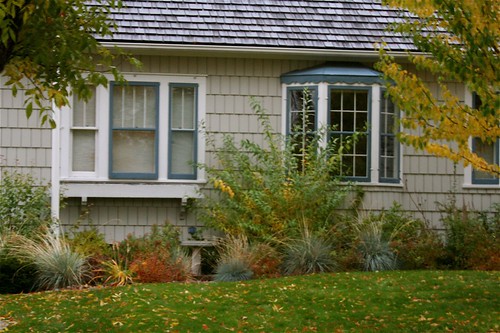
Did you know that keeping your plants away from your home's foundations actually very much improves the air flow and at the same time discourages pests?
Instead of creating flower beds around the foundations, place them along the property perimeter and lay pebbles, crushed shell or even pavement all around the house.
***
Instead of creating flower beds around the foundations, place them along the property perimeter and lay pebbles, crushed shell or even pavement all around the house.
***
Saturday, September 20, 2008
Endangered species: Prickly apple cactus
Fragrant prickly apple cactus (Cereus eriophorus var. fragrans), also known as fragrant woolly cactus - is a slender, columnar cactus tree. It can grow up to 5 meters tall on dry-sandy soil, prefers partial shade, it sometimes grows more horizontally (than in height) and likes to recline its long stems over surrounding vegetation.
Prickly apple is native to Florida but can presently only be found in three geographically-isolated areas of southeastern coastal Florida. Since November 1 of 1985 fragrant woolly cactus is listed as endangered. It is protected from destruction on public lands. Yet - on private lands the loss of habitat and fragmentation remain serious threat.
Seeds of this endangered succulent are most likely distributed by birds, rodents and gopher tortoises.Its flowers are showy and fragrant, white or pink-colored and open only at night.
Unfortunately, I couldn't find a good photo I could use.
***
***
Friday, September 19, 2008
Easy to propagate annuals: Star cluster or "Pentas Lanceolata"
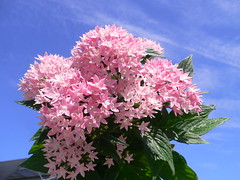
These beauties come in pink, lavender pink or red. They vigorously bloom all summer and the butterflies are crazy about them!
They grow 12 to 18 inches tall and can spread 2 to 3 feet wide (given enough space). Pentas perfom equally well in baskets, planters and borders and don't mind Florida's hot sun one bit...
They grow 12 to 18 inches tall and can spread 2 to 3 feet wide (given enough space). Pentas perfom equally well in baskets, planters and borders and don't mind Florida's hot sun one bit...
Thursday, September 18, 2008
Old and young - like fall and spring

Two days ago, this was the most stunning sight I caught in my backyard that morning. It was one of those moments when you exclaim out loud "OMG" - even though there's noone around to explain the reaction. It was also one of those moments when you simply have to take a picture...
***
Wednesday, September 17, 2008
Colors of fall


Puffy clouds and the browning needles on the tall longleaf pine tree - the first sights and smells of fall... although, there are still plenty of summery pinks and reds and blues around.


***
Tuesday, September 16, 2008
Fall color
We don't get to see a lot of fall colors around here but below are some that I captured this morning.


Photo above: Purple coneflowers - echinacea, now ready to become food for birds and - to reseed itself.

Photo above: All of a sudden, pine trees have lots of brown needles - a definite sign of fall being right around the corner.

Photo above: American Beauty Berry with bright purple berries is already standing out from the rest of the greenery, although - that color is still getting deeper and even more showy...

Photo above: Wild persimmons are starting to paint themselves in orange. It's their favorite fall shade... :)

Photo above: Virginia creeper on the dead oak tree. It's a lovely sight, year round.
***
Easy to propagate annuals: Angels' Trumpets
I remember as it was yesterday when and where I first saw these beauties - although I was still a child.
It was a beautiful summer and my family was taking summer vacations on the beach. Angels' Trumpets were growing on the trellis, all over the place where we had lunch every day. Even back then I thought that these were the most amazing blossoms since I've never before seen anything quite like that .
Those blooms I'll never forget were brilliantly bright orange and fit perfectly on every kid's fingers.
A funny thought just crossed my mind - maybe this sight was an inspiration for Grinch's fingers... :)
Anyway, soon after that my aunt that not only has a green thumb but a magical one (since she successfully grows just about anything she can lay her hands on - or anything with roots) planted one. This tropical plant didn't like colder climate quite as much so the blooms weren't nearly as bountiful as on the beach but it faithfully bloomed every summer and we all enjoyed the unusual flowers and their scent, especially my grandfather.
Now, back to the present.
Angel's trumpet (Brugmansia spp.) grows 4 to 8 feet tall and 3 to 6 feet wide. It likes full sun or at least afternoon sun. Its blooms are sweetly scented and come in shades from white to salmon, soft yellow, peachy pink to orange.
Now is the right time to make cuttings of Angel's trumpet and enjoy even more angelic trumpets and their sweet scent next season.
***

It was a beautiful summer and my family was taking summer vacations on the beach. Angels' Trumpets were growing on the trellis, all over the place where we had lunch every day. Even back then I thought that these were the most amazing blossoms since I've never before seen anything quite like that .
Those blooms I'll never forget were brilliantly bright orange and fit perfectly on every kid's fingers.
A funny thought just crossed my mind - maybe this sight was an inspiration for Grinch's fingers... :)
Anyway, soon after that my aunt that not only has a green thumb but a magical one (since she successfully grows just about anything she can lay her hands on - or anything with roots) planted one. This tropical plant didn't like colder climate quite as much so the blooms weren't nearly as bountiful as on the beach but it faithfully bloomed every summer and we all enjoyed the unusual flowers and their scent, especially my grandfather.
Now, back to the present.
Angel's trumpet (Brugmansia spp.) grows 4 to 8 feet tall and 3 to 6 feet wide. It likes full sun or at least afternoon sun. Its blooms are sweetly scented and come in shades from white to salmon, soft yellow, peachy pink to orange.
Now is the right time to make cuttings of Angel's trumpet and enjoy even more angelic trumpets and their sweet scent next season.
***
Monday, September 15, 2008
Easy to propagate annuals: Coleus
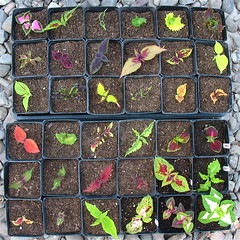
My earliest memory of propagating with cuttings is all about coleus. My dad always had at least two thriving Coleus plants on our living room window and jars and glass vases all around our home were filled with brightly colored Coleus' cuttings, some rooted and ready to be planted at all times.
It's probably that memory of my childhood that makes me feel that Coleus is an all time easiest plant to root - by simply sticking its cutting in water.
Although, I have to warn you that rooting in water produces quite brittle roots and careful planting is recommended.
But if you propagate as described in this post, Coleus is your almost guaranteed success.
With plenty of moisture, every plant will add a big splash of color to any proper space.
Coleus can grow 2 to 3 feet in height and width. not that different cultivars have different sun requirements.
***
It's probably that memory of my childhood that makes me feel that Coleus is an all time easiest plant to root - by simply sticking its cutting in water.
Although, I have to warn you that rooting in water produces quite brittle roots and careful planting is recommended.
But if you propagate as described in this post, Coleus is your almost guaranteed success.
With plenty of moisture, every plant will add a big splash of color to any proper space.
Coleus can grow 2 to 3 feet in height and width. not that different cultivars have different sun requirements.
***
Sunday, September 14, 2008
Easy to propagate annuals: Lantana
Some annuals are easy to propagate. So, instead of tossing them in fall, make cuttings and have plenty of continuously blooming beauties for next year's flower beds and containers.
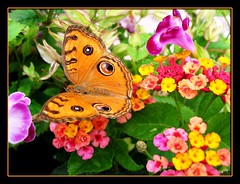
Lantana spp. is one of those beautiful, hardy plants and butterfly magnets that we never want to be without again after we've experienced their vigor and brightly-colored blooms.
They come in gold, yellow, pink, peach, orange and red color and grow 2 to 3 feet tall and 2 to 4 feet wide.
***
Lantana spp. is one of those beautiful, hardy plants and butterfly magnets that we never want to be without again after we've experienced their vigor and brightly-colored blooms.
They come in gold, yellow, pink, peach, orange and red color and grow 2 to 3 feet tall and 2 to 4 feet wide.
***
Saturday, September 13, 2008
How to propagate annuals in fall
About two months before the projected first frost day for your area it's time to start collecting cuttings to propagate some annuals for next year's garden and planters.
Plugs or cell trays are your best choice for large quantity of cuttings, otherwise any small, clean container with drainage holes will do.
Soilless seed-starting mix drains well, is disease free and works really well with rooting hormone. In my experience, this is by far the most full-proof combo for successful start of any kind of cuttings.
Cut the top 4 to 6 inches from the healthiest branches of chosen plant. Place cuttings in water and plant as soon as possible.
Poke a hole into well watered soil, strip the cutting off the first two to four sets of leaves (these wounds will form new roots).
To promote branching, pinch off the top set of leaves.
Cuttings with large leaves require an extra step. Cut their leaves in half to make sure their stem can take up enough water for the new plant to root and grow.
Dip the bare stem of the cutting in water first and then in rooting hormone, tamp gently to remove excess hormone and finally insert cutting in the soil.
Keep cuttings away from direct sun.
To add extra boost, some sources recommend misting newly planted cuttings with water, mixed with a splash of seaweed solution - twice a day for two to four weeks.
A piece of plastic or burlap over cuttings will reduce evaporation.
Water your cuttings when the soil becomes dry and transplant them into 3-inch pots before they become rootbound.
***
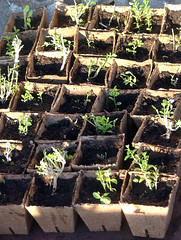
Plugs or cell trays are your best choice for large quantity of cuttings, otherwise any small, clean container with drainage holes will do.
Soilless seed-starting mix drains well, is disease free and works really well with rooting hormone. In my experience, this is by far the most full-proof combo for successful start of any kind of cuttings.
Cut the top 4 to 6 inches from the healthiest branches of chosen plant. Place cuttings in water and plant as soon as possible.
Poke a hole into well watered soil, strip the cutting off the first two to four sets of leaves (these wounds will form new roots).
To promote branching, pinch off the top set of leaves.
Cuttings with large leaves require an extra step. Cut their leaves in half to make sure their stem can take up enough water for the new plant to root and grow.
Dip the bare stem of the cutting in water first and then in rooting hormone, tamp gently to remove excess hormone and finally insert cutting in the soil.
Keep cuttings away from direct sun.
To add extra boost, some sources recommend misting newly planted cuttings with water, mixed with a splash of seaweed solution - twice a day for two to four weeks.
A piece of plastic or burlap over cuttings will reduce evaporation.
Water your cuttings when the soil becomes dry and transplant them into 3-inch pots before they become rootbound.
***
Friday, September 12, 2008
Backyard garden lead pollution
Especially if you live in an urban area, be aware that there might be lead present in the soil around your house - which makes eating your home-grown veggies risky.
This kind of pollution is primarily widespread
In case you're determined to stick with your native earth, have it tested (look under "laboratories" in your phone book or pick up a home test kit which is less reliable but cheaper solution).
It's also good to know that
Sources:
Mercola
The Boston Globe
***

This kind of pollution is primarily widespread
- around old homes - flakes of previously used lead paints
- near busy roads - remnants of leaded gasoline
- around suburban homes, built near apple orchards - lead arsenate used to be a regular pesticide
In case you're determined to stick with your native earth, have it tested (look under "laboratories" in your phone book or pick up a home test kit which is less reliable but cheaper solution).
It's also good to know that
- corn
- squash
- peas and
- tomatoes
Sources:
Mercola
The Boston Globe
***
Thursday, September 11, 2008
Plant your peppers in September
We've gotten so used to peppers being available year-round that most people don't even think about them "being in season." However, if you live in Florida, September is a good time to plant your winter crop for delicious home grown peppers, sweet or hot.
Recommended sweet pepper varieties for Florida:
Recommended hot pepper varieties for Florida:
Because of their shallow roots, mulching is especially beneficial for peppers. Mulched pepper plants grow significantly larger than unmulched plants. See the list of typical organic mulches here.
Since peppers' branches are fairly brittle and they eventually grow heavier with peppers, some plants might greatly benefit from staking or caging.
Source for varieties
***
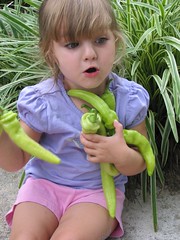
Recommended sweet pepper varieties for Florida:
- Big Bertha
- Early Calwonder
- Jupiter
- Sweet Banana
- Yolo Wonder
Recommended hot pepper varieties for Florida:
- Habanero
- Hungarian Wax
- Jalapeno
Because of their shallow roots, mulching is especially beneficial for peppers. Mulched pepper plants grow significantly larger than unmulched plants. See the list of typical organic mulches here.
Since peppers' branches are fairly brittle and they eventually grow heavier with peppers, some plants might greatly benefit from staking or caging.
Source for varieties
***
Wednesday, September 10, 2008
Best time to plant green beans in Florida
September is the perfect time to plant all kinds of beans in Florida and enjoy these nutritional crops throughout the cool season. As with all the food plants, it's crucial to choose the best varieties, the ones that are tested to perform well in Florida's extreme conditions.
I believe it's quite safe to rely on University of Florida recommendations.
Recommended snap bush beans:
Recommended shell bush beans:
Recommended bush beans, planted for color, as decorative plants:
Recommended pole beans:
Recommended lima beans:
Pole and lima beans need support. Provide them with trellis, poles or grow them with corn.
***
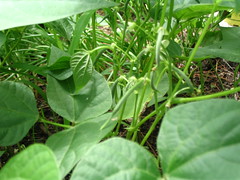
I believe it's quite safe to rely on University of Florida recommendations.
Recommended snap bush beans:
- Bush Baby
- Bush Blue Lake
- Cherokee Wax
- Contender
- Harvester
- Provider
- Roma
- Tendercrop
Recommended shell bush beans:
- Horticultural
- Pinto
- Red Kidney
Recommended bush beans, planted for color, as decorative plants:
- Burgundy
- Purple Teepee
Recommended pole beans:
- Blue Lake
- Dade
- Kentucky Wonder 191
- McCaslan
Recommended lima beans:
- pole Florida Butter
- Dixie Butterpea
- Fordhook 242
- Henderson
- Jackson Wonder
- pole Sieva
Pole and lima beans need support. Provide them with trellis, poles or grow them with corn.
***
Tuesday, September 9, 2008
Hernando Herb Society's tea and knowledge
Event: Hernando Herb Society to serve tea and knowledge - to all interested to learn more about the group
When: 9/22/08 from 1 to 3 p.m.
Where: Hernando County Cooperative Extension Service, 19490 Oliver Street, Brooksville
Admission: free - limited space, reservations advised: call Marcia at 352-799-8676 or Mary at 352-799-5717
The Hernando Herb Society is sponsoring a tea for all those interested in learning more about the group that provides educational opportunities, programs, field trips and hands-on experiences to herb enthusiasts.
Group's monthly meetings feature speakers with expertise in the field of planting and growing herbs, gourmet cooking with herbs, herbal cosmetics, herbal crafts and gifts. Herbal refreshments are served.
Source
***
When: 9/22/08 from 1 to 3 p.m.
Where: Hernando County Cooperative Extension Service, 19490 Oliver Street, Brooksville
Admission: free - limited space, reservations advised: call Marcia at 352-799-8676 or Mary at 352-799-5717
The Hernando Herb Society is sponsoring a tea for all those interested in learning more about the group that provides educational opportunities, programs, field trips and hands-on experiences to herb enthusiasts.
Group's monthly meetings feature speakers with expertise in the field of planting and growing herbs, gourmet cooking with herbs, herbal cosmetics, herbal crafts and gifts. Herbal refreshments are served.
Source
***
Monday, September 8, 2008
Tomato plants - Proven performers for Florida's climate
Once your raised bed or container is filled up with foolproof soil mix and ready to be inhabited with food plants, it's time to choose the proven varieties of plants that will thrive in Florida's climate. Healthy and plentiful veggie crop or victory in the garden depends on the choice of the right variety.
Note: Always avoid buying nursery plants that aren't even labeled by variety, no matter how luscious the images on the packaging might be.
University of Florida keeps testing tomato plants for
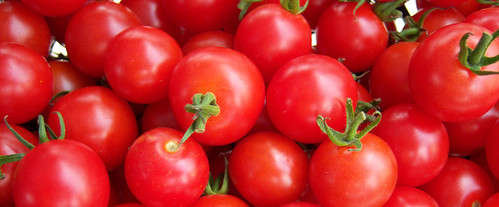
As a result, UF's recommended varieties for growing in Sunshine State are as follows:
And - guess what!
September is the right time to plant tomatoes in Florida.
***
Note: Always avoid buying nursery plants that aren't even labeled by variety, no matter how luscious the images on the packaging might be.
University of Florida keeps testing tomato plants for
- pest resistance
- disease resistance and
- fruiting potential
As a result, UF's recommended varieties for growing in Sunshine State are as follows:
- large fruit tomato varieties
- Better Boy
- Bragger
- Celebrity
- Duke
- Flora-Dade
- Floradel
- Floramerica
- Manalucie
- Solar Set
- Sun Coast
- Walter
 Celebrity Tomatoes
 - small fruit tomato varieties
- Chelsea
- Cherry
- Florida Basket
- Micro Tom
- Patio
- Sweet 100
Sweet 100 Cherry Tomatoes
And - guess what!
September is the right time to plant tomatoes in Florida.
***
Sunday, September 7, 2008
How to make Florida soil fertile
Everyone who has ever tried growing fruits and veggies in Florida soil already knows how nothing would ever grow in the ground. No wonder - with less than 2 percent of organic matter in Sunshine State's natural soils, every kind of fruit, veggies and even most herbs - can only be starved to death.
Any healthy vegetable garden requires good soil mix which means at least 25 percent of organic matter in the earth - to provide sufficient nutrients for food crops.
So - how to garden in Florida successfully?
Retired horticulturist Allen Cordell from Largo has decades of in-the-dirt experiences about growing foods in Florida. He worked for Pinellas County Extension for 25 years and oversaw the vegetable and herb garden at the Florida Botanical Gardens.
Cordell recommends growing food crops in:
- containers with with good drainage which are best choice especially for the first time Florida gardeners - you can keep moving them around your property until you find the perfect sun exposure and natural protection for your plants
- raised beds - at least 8 inches deep (see detailed description for A Raised Vegetable Garden)
or

Cordell's recipe for a soil mixture:
- 4 parts of bagged topsoil - choose inexpensive but loose and pliable to the touch
- 1 part perlite - to boost moisture retention, to improve drainage and encourage root growth
- 1/2 part dolomite - to boost calcium

***
Saturday, September 6, 2008


Friday, September 5, 2008
Simple soil PH test
Is your soil acidic or alkaline?
There's an easy (and almost instant!) way to find out.
All you need is:
-------------------------
*litmus paper
*distilled water and
*small sample of soil you want to test
Here's how to do the test:
------------------------------------------
1. Put some soil in the jar and mix it with distilled water.
2. Dip the litmus paper to the soil-water solution.
3. Compare/match the shade of the litmus paper you used to a pH chart that came with the litmus paper
Results:
---------------
* Gardens' on sandy soil best pH range is between pH 5.8 and 6.3.
* For pH below 5.5, apply lime - according to recommendations from a reliable source (use lime with great caution!).
* For alkaline soils with pH 7.0 and above, there is no practical and permanent way to lower pH. On sandy soils, fertilizer with micronutrients (8-8-8 or 15-15-15) should be used.
Have fun and enjoy your crops! :)
***

There's an easy (and almost instant!) way to find out.
All you need is:
-------------------------
*litmus paper
*distilled water and
*small sample of soil you want to test
Here's how to do the test:
------------------------------------------
1. Put some soil in the jar and mix it with distilled water.
2. Dip the litmus paper to the soil-water solution.
3. Compare/match the shade of the litmus paper you used to a pH chart that came with the litmus paper
Results:
---------------
* Gardens' on sandy soil best pH range is between pH 5.8 and 6.3.
* For pH below 5.5, apply lime - according to recommendations from a reliable source (use lime with great caution!).
* For alkaline soils with pH 7.0 and above, there is no practical and permanent way to lower pH. On sandy soils, fertilizer with micronutrients (8-8-8 or 15-15-15) should be used.
Have fun and enjoy your crops! :)
***
Thursday, September 4, 2008
Easy accessible raised beds
It doesn't really mater in what shape you choose to design your new raised bed. The most important thing is to make it as easily accessible for planting, weeding, watering, harvesting and cultivating - as possible.
That's also the reason why smart and experienced gardeners keep their raised beds no more than 6 feet wide - for access from both sides.
When you can only approach your raised bed from one side, keep it 3 feet (or less) wide for easy maintenance.
***
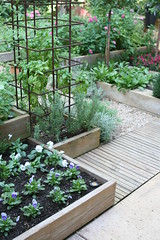
That's also the reason why smart and experienced gardeners keep their raised beds no more than 6 feet wide - for access from both sides.
When you can only approach your raised bed from one side, keep it 3 feet (or less) wide for easy maintenance.
***
Wednesday, September 3, 2008
Round flower bed
Round flower/herb beds are fun. They add that relaxed, lively and playful feel to the landscape which might otherwise look too orderly (notice example on the photo).
Another good thing about the round bed is that one is easy to create.
If you decide to use curved edgers, the price tag in your local store will most likely tell you how many you need for a circle.
In case you decide to build your circular flower bed with stone, draw or mark that circle (future raised bed) first.
***

Another good thing about the round bed is that one is easy to create.
If you decide to use curved edgers, the price tag in your local store will most likely tell you how many you need for a circle.
In case you decide to build your circular flower bed with stone, draw or mark that circle (future raised bed) first.
***
Tuesday, September 2, 2008
Garlic scape
Did you know?
Garlic scapes (like the one on the picture) are the false stems, found on hardneck garlic varieties.
If garlic is growing in your garden, remove them from the mother plant and enjoy their taste in salads, on potatoes, with butter, sour cream and even in a stir fry.
***
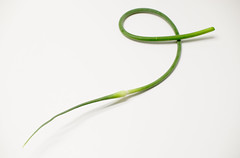
Garlic scapes (like the one on the picture) are the false stems, found on hardneck garlic varieties.
If garlic is growing in your garden, remove them from the mother plant and enjoy their taste in salads, on potatoes, with butter, sour cream and even in a stir fry.
***
Monday, September 1, 2008
Organic mulches
Mulches not only benefit most plants in the sizzling summer heat, keeping the earth moist, cooler and weed-free, but also warm up the ground faster in spring and keep it warmer.
Some plants tested yielding bigger crops with certain kinds of mulch (like tomato plants with red mulch and pepper plants with any kind of mulch - because of their shallow roots).
Typical organic mulches you can use in your garden are:
***
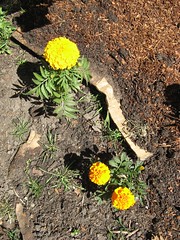
Some plants tested yielding bigger crops with certain kinds of mulch (like tomato plants with red mulch and pepper plants with any kind of mulch - because of their shallow roots).
Typical organic mulches you can use in your garden are:
- straw
- hay
- layered newspaper covered with straw or hay
- grass clippings (from the chemical-free lawns)
- shredded or chipped wood mulches
- shredded dry leaves
- cocoa fiber
- pine needles
- carton (see the photo)
***
Subscribe to:
Posts (Atom)
Daria's World - blog about people and things that matter the most
