Friday, April 25, 2008

Green Homes America


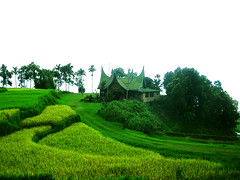
Green House
Originally uploaded by gomer333


Since 1994 the U.S. Green Building Council (USGBC)


  • provides standards for environmentally sustainable constructions,
  • runs the national voluntary rating system and
  • awards Leadership in Energy and Environmental Design (LEED) certificates to the "green buildings" after evaluation.

    Currently, 11,400 newly built homes are undergoing evaluation according to http://www.allheadlinenews.com/articles/7010684228


    The rating system addresses six major areas:

    *Sustainable sites
    *Water efficiency
    *Energy and atmosphere
    *Materials and resources
    *Indoor environmental quality
    *Innovation and design process

Garlic Chives

Garlic Chives


Garlic chives (Allium tuberosum) grow a bit larger than onion chives. They have flat leaves and robust flavor and can therefore be overused. For that reason, use sparingly when you first try them.

Garlic chives are outstanding in herb butters.

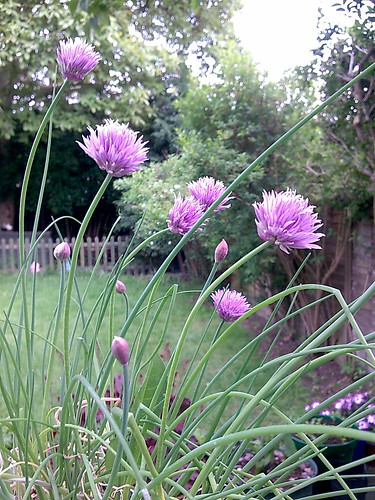
This plant can become invasive (keep it under control). It produces pretty white flowers (see photo below), scented like violets, great in fresh or dry arrangements.

Garlic Chives


***

Thursday, April 24, 2008

Green building products

Green building products are the ones that are Earth and user-friendly like:


  • paints and other building materials that are free (or as low as possible) in VOCs (volatile organic chemicals) that will "outgas" (or degas) and cause indoor air pollution (like plywood made with glues with a high formaldehyde content)
  • local products or the ones that are not shipped long distances - green practice
  • materials from easily renewable sources (like bamboo)

  • recycled materials like glass, wood, cork, fabrics, paper, carton and others
  • by-product materials
  • low-flow shower heads, faucet aerators and toilets
  • compact fluorescent bulbs that are 75 percent more energy efficient than traditional light bulbs
  • Energy Star rated appliances - and more

Seeing the whole picture, building or renovating "green" should benefit the environment, at the same time greatly improve living conditions of the occupants, and last but not least, save lots of money to the homeowner. Built the right way from start, a new home should be durable, healthy, long-lasting, low-maintenance, energy-efficient and environmentally friendly.


Anyone can join the "green building revolution" by choosing better materials in all kinds of home improving projects.


resize


***

Medieval Prescription

Leek and potato soup topped with chopped chives and parsley

Did you know that in medieval England parsley was prescribed to people who suffered from bad digestion?

It looks like this medieval prescription was “built on some firm foundations” since parsley is still used in the same way today:

Phytotherapists (herbalists) still prescribe parsley to aid the digestion of heavy foods.


***

Wednesday, April 23, 2008

St. John's Wort - Hypericum fasciculatum, Native to Florida

According to the author of the photo below, this picture of a shruby St. John's Wort was taken in Sumatra, Florida. Hypericum fasciculatum or Peelbark St. John's-Wort can be found throughout Florida, Georgia, Alabama, Louisiana, Mississippi and North and South Carolina.

It prefers wet flatwoods, bogs, swamp and pond margins. Hypericum fasciculatum is charcterized as 'Aquatic, Wetland and Invasive Plant' (University of Florida, Center for Aquatic and Invasive Plants). Despite that, it sure looks pretty!


Hypericum sp., Rt. 379 Sumatra, Florida 4/1/06  - 2.jpg

***

Landscaping around green homes

Actually, there's a lot anyone can do for the environment as well as their own wellbeing, no matter if the home you presently live in is green or standard built.

Spending some quiet moments in your yard with plants and observing wildlife is very beneficial, nurturing therapy - and it costs you nothing. If gardening is one of your hobbies than you know what I'm talking about and if you're not, it's never too late to start growing some easy care flowers and soon after enjoy their new growth, blooms and fruits (if they produce any).

However, today I'm not talking about growing just any kind of plants but primarily about the "green landscaping" which includes:


  • growing native plants that use the least amount of watering once established
  • growing plants, suitable for xeriscaping because they are also draught-resistent
  • planting groundcovering plants instead of big areas of lawn (lawns are the biggest consumers of drinking water in U.S. - besides watering in modern agriculture)
  • planting trees and brushes to prevent the run-off of the rain water
  • planting deciduous trees so that they cool a home during warmer months, thus reducing the need for air conditioning
  • planting deciduous bushes around the air conditioning unit to keep the unit cool during the summer
  • capturing the rain water in the rain barrels (and use that water for watering plants)


poly landscaping
In the cities like New York, the "green skyscrapers" started practicing "living roof" which simply means plants on the top of the building. A living roof can capture up to 80 percent of the rain water and has many other benefits. Keeping the streets cooler during the heat of the summer is just one of them.


a look at the green roof of the living area


***

Tuesday, April 22, 2008

Green homes more affordable

Building more environmentally and occupants-friendly homes used to be reserved exclusively for the wealthy. "Going green" meant "spending more green."

But lately, living in more Earth-friendly and healthier house, turned into a mainstream and became affordable for most homeowners. Accordingly, the number of builders and remodelers who are offering their customers "green" option to build or improve their homes, is growing rapidly.

This year at the International Builders’ Show in Orlando, Fla., in February, the National Association of Home Builders unveiled its new “Certified Green Professional” designation. Contractors who want to earn this certification take part in the course “Green Building for Building Professionals,” where they learn principles to incorporate in their work that will result in homes that use less energy, conserve water and are all around more eco-friendly.
Source: http://www.dailygazette.com/news/2008/apr/20/0420_greenbuild/

National Association of Home Builders (NAHB) developed three levels of green certification: Bronze, Silver and Gold - to make it more appealing to builders as well as their customers.

Homes earn points for various "green features" like sustainable building materials, efficient heating/cooling systems, site orientation, landscaping, energy and water efficient products with Energy Star ratings etc. More points means higher green rating.


Loghouse

***

Monday, April 21, 2008

Gazania or Treasure Flower

Gazania is a herbaceous plant (genus Gazania) of the daisy family with daisy-like, cheerful-looking blooms.

In U.S., Gazanias with double blooms (Gazania Sunbather™) were introduced this season. They differ from the standard varieties not only in the number of petals but more importantly - the flowers stay opened at all times/any light conditions. Their blooms are 'semi-double, and pompom-shaped in the center, with no dark eye like traditional Gazanias. The color is so intense that it won't fade even in extreme summer heat and sun. ' Gazania Sunbather™ is also great for cutting.


Although Gazania is not a Florida native plant, I found it to be one of the most reliable outdoor flowers and one of the most persistent bloomers in our zone 9.

It doesn't mind the highest or the lowest (freezing) temperatures we get around here, it comes in many different - but always brilliant colors or with multi-colored blooms, it's draught-resistant, not picky about the soil, does well in flower beds as well as in containers and on and on goes the list of Gazania's valuable characteristics.


yellow flowers


If you don't have much time for gardening or you think you have a brown thumb, maybe you are a novice to gardening - but still want something other than plants from the cacti family, give a shot to Gazania. I'm sure you'll find it just as hardy as I'm describing it here - or even better.


Origins: According to Wikipedia, Gazania is native to South Africa, Mozambique, Tanzania and Angola and naturalized in Australia and New Zealand. It's a perennial in temperate climates (or indoors) and an annual in colder climates.

gazania


More Gazania facts:

  • does well in windy and south-facing locations


  • suitable for balcony planters


  • prefers full sun - its blooms close in shady or cloudy conditions


  • some parts of the plant are poisonous when digested but there's a report from CA that bunnies really enjoyed munching on Gazanias in one yard in San Diego area


  • over-watering causes crown rot and decreases their blooming performance


  • suitable for xeriscaping


  • great groundcover
  • blooms repeatedly and even more so with deadheading


  • grows 6-12 in. (15-30 cm) tall


  • spacing: plant 6-9 in. (15-22 cm) apart in well-drained soil


  • propagation: from seeds (outdoors after the last danger of frost)


  • attracts bees, butterflies and birds


  • some species bear different colored blooms on the same plant


  • proved to do well in seaside gardens


  • many gardeners find Gazania 'the easiest, most prolific plant' in their gardens


  • regular deadheading makes tons of flowers


Gazania 2

***

Friday, April 18, 2008

If we had no winter... by Anne Bradstreet

"If we had no winter,
the spring would not be so pleasant;
if we did not sometimes taste of adversity,
prosperity would not be so welcome."


***

Thursday, April 17, 2008

Mexican Petunias

My Mexican Petunias started blooming yesterday and I was thrilled to see the first bluish-purple delicate bloom in one of my backyard flower beds. These poor things froze several times this winter and started growing again. Since this was my first winter with Mexican Petunias I was afraid to lose them but my neighbor Linda (a native Floridian) assured me that they always come back no matter how bad things might look during the colder months (at least in our growing zone 9).


Mexican Petunia (sometimes called Wild Petunia) is a perennial plant (zones 8 to 10), not at all related to the common annual petunias, known to everyone. Flowers are very showy (especially due to their color) but more so in full sun conditions.

Once established, these plants are draught-resistant but perform much better with regular watering. To maintain their shape, pruning away 1/3 of long stems after every blooming cycle can do wonders. With no pruning, they start looking kind of leggy after a while.


There is one thing about these hardy plants that everyone who wants to grow them in their yard, should be aware of. Wild Petunias can be pretty aggressive. In optimal growing conditions (good soil) they will reseed (this can be prevented by deadheading) and spread by rhizomes. New shoots might suddenly appear several feet away from the mother plant.

On the other hand, Mexican Petunias also make a great indoor container plant if you can spare them a sunny spot. They come in several varieties, with blooms in white, pink or purple-blue.


Wild Petunia 'Katie' dwarf ruellia (or 'Nolan's Dwarf') grows only about 6 inches tall. With its dense growing habit 'Katie' makes a nice ground cover. No deadheading is needed with 'Katie', it blooms all season long and doesn't mind neglect. In good growing conditions it will also reseed and produce true offspring, but it is much less invasive than the rest of its "relatives."

Mexican Petunias are mostly disease and pest-free; only once in a while snails and caterpillars like to munch on them.


***

Wednesday, April 16, 2008

Sunday, April 13, 2008

Jasmine

This aromatic evergreen is very hardy once established. It takes well the intense heat and direct sun of Central Florida's zone 9, as well as flooding from heavy rains. The one thing jasmine doesn't like however, are freezing temperatures.


***

Saturday, April 12, 2008

Bottlebrush Tree

Bottlebrush tree originates from Australia but grows well in warmer U.S. zones 8 or higher. This is another evergreen with narrow, lance shaped, and leathery leaves, grown for its foliage as well as unusual red blooms which attract bees, butterflies and birds.


Established plants are drought-tolerant and therefore popular for xeriscaping. It grows 10 to 12 feet tall.


***

Friday, April 11, 2008

Red Hibiscus

Hibiscus is very popular with gardeners and plant collectors in all the different climates around the world; it's grown indoors in colder areas (like northern Canada) and outdoors in warm to steamy hot ones (like the Brazil backyards) but in Florida, this is one of the easiest plants to grow. Some of the hibiscus varieties are such a prolific bloomers that they produce vibrantly colored flowers year-round.


There are hundreds of single-petaled and double-petaled varieties attainable. The common ones are sold in most garden centers while the rare, exotic hybrids can be purchased at specialty nurseries and plant shows.

Hibiscus plants come in all the different colors, from most common reds to pinks, yellows, lavenders and blues to whites, browns and golds.

The tallest kinds can grow as tall as 10 to 15 feet and others are only a few feet tall. Since these plants are so easy to shape by pruning in early spring, in Florida hibiscus is frequently used as a hedge, especially around the business buildings.


For all the frugal gardeners out there and especially the ones who enjoy growing everything from seeds, here's some good news: growing hibiscus from seed is very easy!

Lots of amazing photos of hibiscus' blooms and useful information can be found at http://www.internationalhibiscussociety.org/

***

Thursday, April 10, 2008

Oleander

Oleander is an evergreen bush or tree that grows well in subtropical climates. No wonder it's so popular in Florida that it's used as a hedge - a lot.


Although one of the most poisonous plants (especially dangerous for young children), it is grown for the showy flowers which appear in clusters at the end of each branch. Colors of the blooms range from most common whites and pinks to yellows, reds, purples and orange. Some cultivars even have double flowers.


Established oleander plants are drought tolerant but young plants wil grow best in places where they don't have to compete for nutrients with grass or other flora.


One species of large, green caterpillar feeds on oleander plants - and gets aways with it - by eating only the pulp that surrounds the leaf-veins, avoiding the fibers. What these caterpillars leave behind is not a pretty sight...

***

Wednesday, April 9, 2008

New Kid on the Block

Yesterday I travelled south again and took several photos of blooming plants. That was a lot of fun (including climbing on the benches to take better shots - which embarrassed my son who was with me).

Verily, the biggest and nicest surprise was awaiting for me at home. My white and red amaryllis, both in full bloom with more blooms to come. Amaryllis in bloom always takes my breath away with its beauty and delicacy.

Even though the flowers look so delicate and surprisingly to me, the blooms don't really mind the rain. After the heavy rains we had the other night, all the blooms were just as pretty and completely undamaged after the rain as they were on the night before the downpour started. Awesome!!! :)

Here's my gorgeous amaryllis and the rest of the pretty blooms from yesterday in the next couple of days. Enjoy!


***


Saturday, April 5, 2008

Pink Is In!

All along the U.S. Highway 19 in Hernando county, these pretty flowers from the photos below are blooming in tones from white to light pink and hot-hot pink to any rosy-red color in between. The best thing is that these beauties (probably called "weeds" by most Floridians) start blooming around Easter/early March and continue for at least a month if not longer. Looking at them makes one forget about all the red traffic lights...


***

Thursday, April 3, 2008

Chives and Roses

Chives


I don't know what your experiences are regarding chives (and roses) but I just realized that my onion chives are absolutely thriving in a large planter underneath the tea-rose bush. This is the biggest chive plant I have. It's blooming and growing and I keep harvesting. There's never a shortage.

At this point I'm still only guessing if this lavish growth is due to the fact that I keep the soil in this planter moderately moist (since that's what roses like) or is it due to favorable companionship. Or maybe a combination of both.

Wait a minute... Now that I think about it - this rose bush was never doing too well but now with the chives right next to it, it's blooming abundantly - like never before! Go figure...

By the way (in case you're wondering) - there's no fertilizers involved. For watering I use the recycled kitchen water (besides the rain water) and I add compost to the planter every once in a while.

Rose


***

Wednesday, April 2, 2008

Herb of the Angels

Pied d'angélique sauvage (Angelica sp) en été (France).


Even though angelica is often referred to as “the herb of the angels”, it can be devilishly hard to grow, especially in deep southern areas of U.S.

Because of angelica’s beauty, many growers in South keep trying but only a few succeeded moderately.

In northern states, however, angelica develops large leaves with tropical look, establishing itself in the first season and blooming in its second. It also self-sows and once you grow it successfully, you’ll never be without the herb of angels again.


***

Tuesday, April 1, 2008

Parsley as an Ornamental Plant

steph's Parsley

If you grow/use parsley for...
  • its taste,
  • as a remedy,
  • or cosmetic uses,
dark-green, longer-stemmed flat leaf (Italian) parsley is the best.

For garnishing, curly leaf with its bright-green color is preferred.

But just like other herbs, parsley also has several ornamental uses.

More compact, bright-green curly leaf with shorter stems makes an excellent edging for the borders of flower beds.

Worth a try?


Either variety can be grown in a flower bed. Parsley's greenery provides an excellent background for the flowering species of herbs and flowers.


***

Daria's World - blog about people and things that matter the most

Daria's World - blog about people and things that matter the most
Google